

4.8/5 ⭐⭐⭐⭐⭐ 415 user rating
🇺🇸 Proudly American
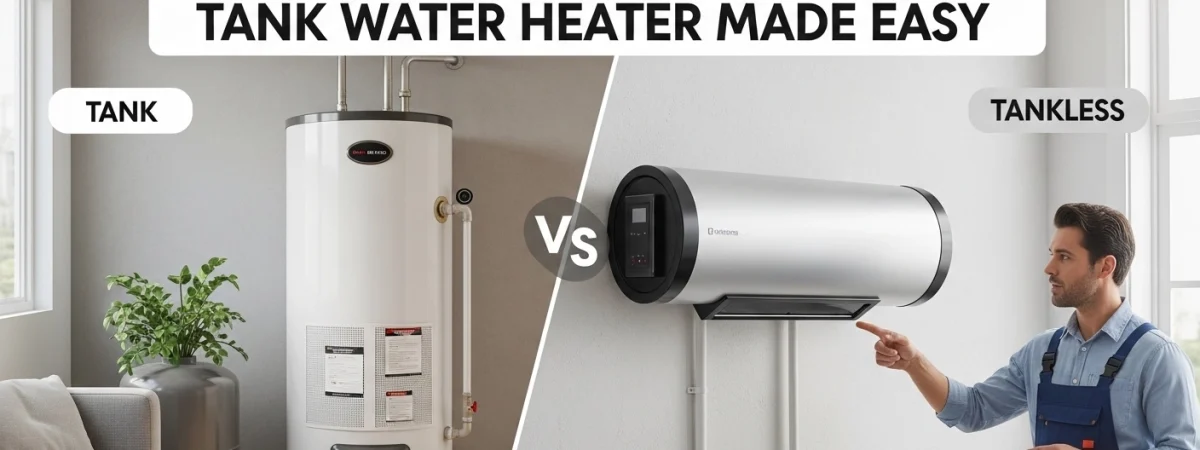
Choosing between a tankless vs tank water heater is one of the biggest decisions you’ll make for your home’s plumbing. Both deliver hot water for showers, dishes, and laundry, but they work in completely different ways and cost very different amounts to buy, run, and maintain. This guide breaks down the real differences in cost, lifespan, energy efficiency, and hot water capacity so you can pick the right system with confidence.
If you want the quick version: a tank water heater is cheaper upfront and simpler to install, making it a solid choice for most budgets. A tankless water heater costs more to install but lasts longer, saves space, and lowers energy bills over time. The best option depends on your household size, hot water demand, and how long you plan to stay in your home.
Feature | Tank Water Heater | Tankless Water Heater |
Upfront cost (unit + install) | ~$800–$2,000 | ~$2,000–$4,500+ |
Lifespan | 8–12 years | 15–20+ years |
Energy efficiency | Standard | 24–34% more efficient (low-use homes) |
Hot water supply | Limited by tank size | Endless, on demand |
Space required | Large (30–80 gallon tank) | Small, wall-mounted unit |
Flow rate | Whole tank at once | 2–5 gallons per minute |
Maintenance | Annual flush | Annual flush, descaling |
A tank water heater stores 30 to 80 gallons of hot water in an insulated tank and keeps it heated around the clock so it’s ready when you turn on the tap. It’s the most common type in American homes because it’s affordable, reliable, and simple to repair.
The trade-off is that once you drain the tank during a long shower or back-to-back laundry loads, you have to wait for it to reheat. Tank units also lose a little energy continuously as they keep the stored water warm, which is called standby heat loss.
A tankless water heater heats water only when you need it. Cold water runs through the unit, a powerful gas burner or electric element heats it instantly, and hot water flows straight to your tap. Because there’s no tank, there’s no standby heat loss and no waiting for a tank to refill.
Tankless systems are compact and mount on a wall, freeing up floor space. Their main limits are flow rate and upfront cost. A single unit delivers 2 to 5 gallons per minute, so very large households running multiple showers at once may need a larger model or a second unit. If you’re weighing a switch, our team at tankless water heater services in Colorado Springs can size the right system for your home.
Upfront, a tank water heater wins. Expect roughly $800 to $2,000 installed, depending on capacity and fuel type. A tankless unit typically runs $2,000 to $4,500 or more, since installation often involves upgrading gas lines, venting, or electrical capacity.
Over the long run, the math shifts. Tankless units use less energy and last nearly twice as long, so many homeowners recover the higher upfront cost through lower monthly bills and by avoiding an early replacement. If your current unit is failing, compare replacement quotes carefully with a licensed plumber before deciding.
According to the U.S. Department of Energy, tankless water heaters can be 24 to 34 percent more energy efficient than tank models for homes that use around 41 gallons of hot water or less per day. High-use homes still see savings, usually in the 8 to 14 percent range. Because tankless units don’t reheat stored water all day, they waste far less energy, which is where most of that saving comes from.
This is where household size matters most. A tank heater delivers a fixed amount of hot water, then needs time to recover. A 40-gallon tank suits most families of three to four, while a 75-gallon tank fits large households with several bathrooms.
A tankless heater delivers hot water continuously, so you never run out mid-shower. The catch is flow rate: if too many fixtures run at once, water temperature can drop. For big families running simultaneous showers, dishwasher, and laundry, sizing the unit correctly is essential.
A tank water heater needs significant floor space, often in a garage, basement, or utility closet. A tankless unit is roughly the size of a small suitcase and mounts on the wall, which is a real advantage in smaller homes and apartments.
Tankless installation is more involved and almost always a job for a professional, especially when it requires new venting or a gas line upgrade. Tank installation is more straightforward but still best handled by a licensed plumber to meet code and stay safe.
Both systems last longer with regular care. For a tank heater, flush the tank once a year to clear sediment, and inspect the valves and connections for leaks or corrosion. For a tankless unit, flush and descale annually, especially in areas with hard water, to keep mineral buildup from reducing efficiency.
If you notice leaks, rust-colored water, strange noises, or inconsistent temperatures, don’t wait. Our water heater repair team in Colorado Springs can diagnose and fix problems before they turn into a full replacement.
Choose a tank water heater if you want the lowest upfront cost, have a simple installation, or plan to move within a few years.
Choose a tankless water heater if you want long-term energy savings, need to save space, want an endless hot water supply, or plan to stay in your home long enough to earn back the higher upfront cost.
For many Colorado Springs homeowners, the decision comes down to budget today versus savings tomorrow. A quick in-home assessment from a licensed plumber is the fastest way to know which system fits your home, water usage, and fuel setup.
For most homeowners staying in their home long-term, yes. The higher upfront cost is often offset by lower energy bills and a lifespan nearly double that of a tank unit.
A tank water heater typically lasts 8 to 12 years. A tankless water heater often lasts 15 to 20 years or more with proper maintenance.
It won’t run out over time, but its flow rate is limited. If too many fixtures run at once, the temperature can dip, so the unit needs to be sized correctly for your household.
Tankless heaters are more efficient because they heat water on demand and avoid standby heat loss. The Department of Energy estimates 24 to 34 percent higher efficiency in low-use homes.
Yes. Tank heaters need an annual flush, and tankless heaters need an annual flush and descaling. Regular maintenance extends the life of either system.

Trusted plumbing experts in Colorado Springs, delivering fast, reliable service for homes and businesses. Your plumbing problems are solved efficiently.
105 N Weber St, Colorado Springs, CO 80903, USA