If the water is rising right now, skip everything else and read the next six lines.
- Stop flushing. A second flush is what turns a clogged toilet into a flooded bathroom.
- Lift the tank lid off and set it on the floor, not on the seat.
- Push the flapper down with your hand — it’s the rubber disc at the bottom of the tank. Hold it closed. This stops water refilling the bowl.
- Close the shut-off valve. It’s the small oval or football-shaped handle on the wall or floor behind the toilet, usually on the left. Turn it clockwise until it stops. If it’s stiff and won’t budge, leave it alone and go back to holding the flapper.
- Put towels down around the base of the toilet.
- Breathe. Nothing is draining anywhere while the water is off. You have time now.
Once the water is off and the bowl has stopped rising, you can work the problem properly. Below is what a plumber actually does, in the order we’d do it.
First: figure out what's stuck, because the method depends on it
Almost every article on this topic hands you seven methods as if they’re interchangeable. They aren’t. Pouring hot water and dish soap on a flushed toothbrush accomplishes nothing except an hour of your life. Work out which situation you’re in first.
A soft, organic clog. Too much toilet paper, waste, a wad of tissue. The bowl fills, drains very slowly, and eventually goes down partway on its own. This is 80% of clogs and it’s the one where heat, soap, and water pressure genuinely work. Go to Methods 1–5.
A solid object. A toy, a toothbrush, a comb, a razor cap, a tampon or applicator, a phone, a wedding ring. Usually there’s a hard stop — water doesn’t drain at all, not even slowly, and you may have heard the object go in. Do not use pressure methods on this. Every squeeze of water and every pour from height pushes the object deeper into the trap or out into the drain line, where it stops being a five-minute fix and starts being a pulled toilet. Skip down to “A solid object went down — do this instead.”
More than one fixture is affected. The toilet is slow and the shower drains slowly, or the tub gurgles when you flush, or water backs up into the bathtub. That is not a toilet clog. That’s your main sewer line, and every DIY method on this page will make the mess worse. Stop and skip down to “When to stop DIY and call someone.”
It clogs constantly. If you’re searching this every few weeks, the clog is a symptom, not the problem. Clear it with the methods below, then read “If your toilet clogs over and over, the clog isn’t the problem.”
Before you start: three safety rules
Wear gloves. Toilet water is genuinely contaminated, not just unpleasant. Rubber dish gloves are fine. If the bowl is high and you’re going to be working in it, safety glasses are not overkill — splashback happens.
Never mix bleach with vinegar. This one matters and nearly nobody mentions it. Several methods below use white vinegar. If you have a bleach tablet sitting in your tank, an in-bowl cleaner clipped to the rim, or you poured bleach in earlier out of hope, do not add vinegar. Bleach plus an acid releases chlorine gas, and a bathroom is a small room with a bad fan. Flush the bleach out and ventilate first, or skip vinegar entirely.
Skip the drain cleaner. Liquid drain cleaner is designed for a sink drain where it flows down and away. A toilet has a trap that holds standing water, so the chemical sits there, diluted, doing very little to the actual clog while it eats at the porcelain glaze and the wax ring. Worse: it’s still sitting there when you or a plumber eventually plunges, and that means caustic splashback in someone’s face. Any honest plumber will tell you they hate walking into a bowl full of drain cleaner.
Lower the water level if the bowl is full to the rim. Most methods below need room in the bowl. Gloves on, use a cup or a small container you’re happy to throw away, and bail water into a bucket until the bowl is roughly half full.
Method 1: Hot water and dish soap
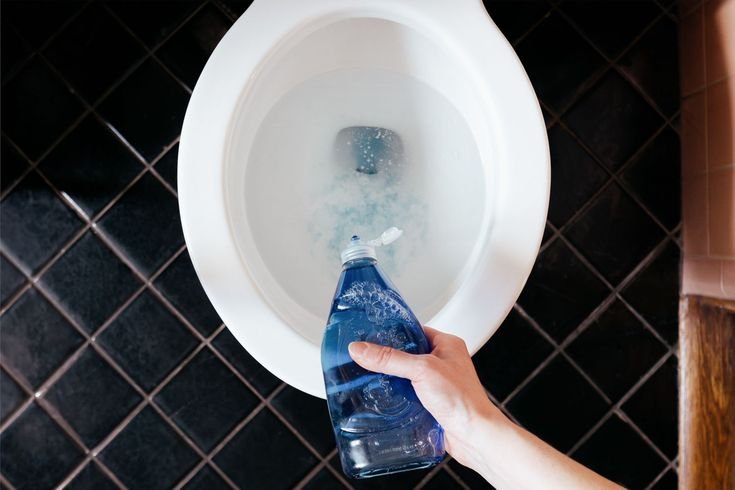
This is the first thing to try and it clears more clogs than everything else on this page combined. Soap lubricates the pipe wall and the clog; heat softens the fats and oils binding a waste-and-paper mass together.
- Squeeze about half a cup of liquid dish soap straight into the bowl. It’s heavier than water and will sink toward the drain, which is what you want.
- Fill a bucket with roughly a gallon of the hottest water your tap will produce.
- Pour it into the bowl in one continuous stream from about waist height, aimed at the drain opening in the centre. The height matters — the falling water delivers force, not just heat.
- Wait 15 to 20 minutes. Actually wait. This is where most people quit early.
- Turn the water back on and flush once.
Do not use boiling water. Dumping boiling water into a cool porcelain bowl can thermally shock it and crack it, and a cracked toilet is a several-hundred-dollar problem replacing a five-dollar one. Hot tap water is enough.
One local note, because we get asked: at Colorado Springs’ elevation, water boils around 200°F rather than 212°F. That does not make boiling water safe here. It’s still far hotter than tap water and still enough to crack a bowl. Use the tap.
No dish soap? Shampoo, body wash, or liquid hand soap all work — anything slick and viscous. A bar of hand soap chopped into small chunks works too; it just needs 20 minutes longer to soften.
Method 2: The plastic bottle pressure trick
This is the closest thing to an actual plunger you can improvise, and it’s underrated. It’s a direct hydraulic push rather than a chemical hope.
- Bail the bowl down until the drain opening is visible or nearly so.
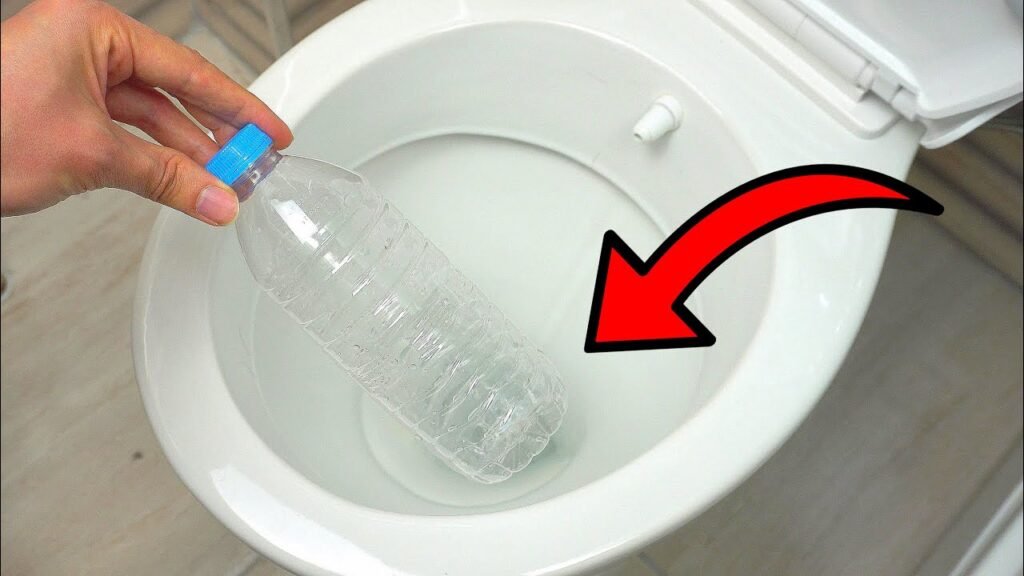
- Fill a two-litre bottle with warm water. The bottle needs a mouth wide enough to seat against the drain opening.
- Cover the opening with a gloved thumb, invert the bottle, and push it firmly into the mouth of the drain.
- Release your thumb and squeeze the bottle hard with both hands.
- Repeat three or four times.
The sudden burst of pressurised water hits the clog the same way a plunger does. It’s the best no-tools option for a stubborn soft clog.
Variation worth knowing: cut the bottom off the bottle, then push the wide open end down over the drain opening and pump the bottle up and down like a plunger cup while keeping the cap on. You get a rough seal and real suction and pressure. Messier, but effective.
If you have a bidet sprayer or a handheld shower hose within reach of the toilet, that’s a directed high-pressure jet you already own. Feed the head into the drain opening, hold a towel over the bowl to control splashback, and pulse it.
Method 3: Pour from height (the plumber's version)
Straight water, no additives, but delivered with force. Fill a large jug or bucket, hold it at waist height or a little above, and dump it into the drain opening in one fast pour — not a trickle. The column of falling water compresses the air and water ahead of it and often drives a partial clog through the trap.
The reason plumbers like this one is that it’s free, immediate, and can be repeated ten times without any risk to the toilet. Combine it with Method 1 — soap first, then the high pour — and you’ve got the single most effective no-tool combination there is.
Method 4: A wire hanger as a makeshift auger
When you can feel that the blockage is right there in the trap, mechanical beats chemical.
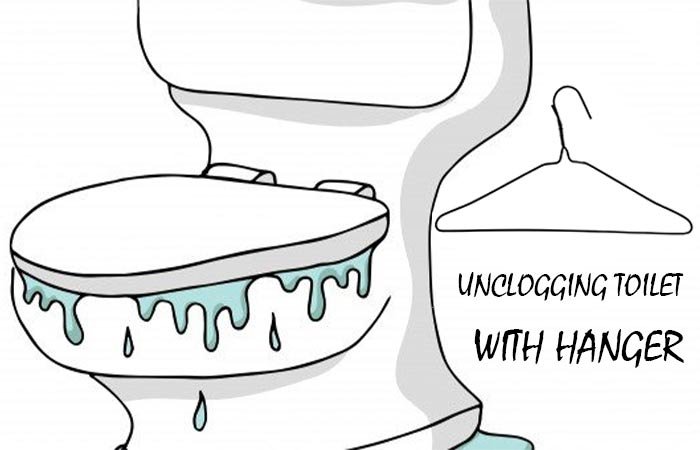
- Straighten a wire coat hanger, leaving a small hook at one end.
- Wrap the tip in a rag and tape it on tightly. Skip this and you will scratch the glaze, and a scratched trap catches paper and clogs faster forever afterward.
- Feed it into the drain opening and work it in with a slow twisting motion.
- Push, twist, and pull back — you’re breaking a mass apart or hooking it out, not ramming it through.
A hanger reaches maybe a foot. If the blockage is deeper than the trap you’ll feel nothing and you’re wasting effort. That’s the point at which a toilet auger — a purpose-built tool with a rubber sleeve that protects the bowl, about $25 at any hardware store — is the right answer.
Never use a straightened hanger without padding, and never force it. If you meet a hard stop that won’t move, that’s a solid object. Stop pushing.
Method 5: The wet/dry vacuum method
If you own a shop vac, this is the strongest DIY option on the list, because suction pulls the clog back instead of driving it deeper. It’s the only method that can retrieve rather than push.
- It must be a wet/dry vacuum. A household vacuum will destroy itself and possibly shock you. If you’re unsure which you have, don’t.
- Use the vac to remove all the water from the bowl.
- Wrap an old towel around the hose a few inches from the end to make a rough seal against the drain opening.
- Push the hose two or three inches into the drain, press the towel to form a seal, and switch on for a few seconds at a time.
- Expect the clog to come back up the hose. Plan on discarding or thoroughly disinfecting the hose end and towel afterward.
Not elegant. Very effective.
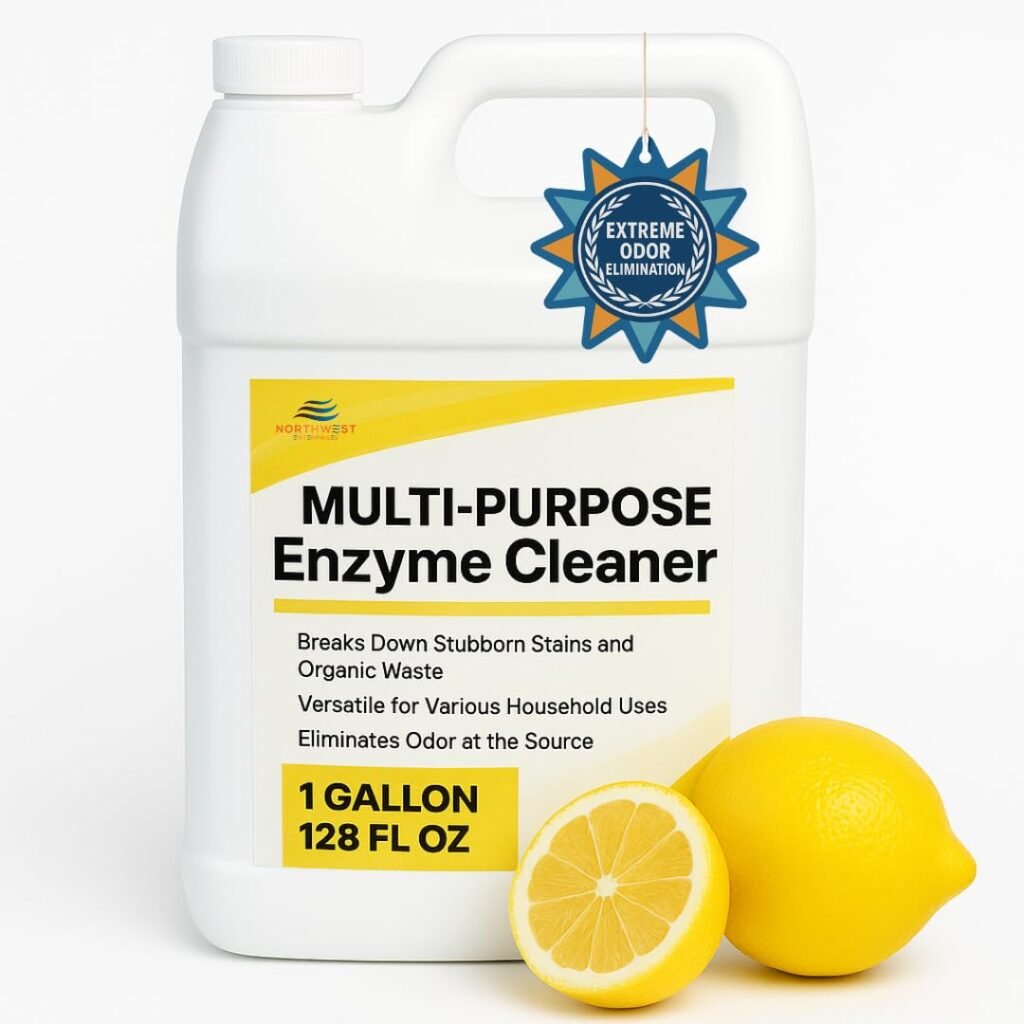
Method 6: Enzyme cleaner (the overnight option)
Enzyme and bacterial drain treatments digest organic material — paper, waste, grease. They are slow, and they are safe. If it’s late, the clog is soft, nobody desperately needs that bathroom tonight, and you have a second toilet, this is the low-effort play.
Pour the dose the label specifies into the bowl, leave it overnight, flush in the morning. It will not touch a solid object and it will not clear a root intrusion. But it’s the one product we’re happy to see people pour into a toilet, and it’s genuinely good for a septic system rather than harmful to it — relevant if you’re out toward Black Forest, Falcon, or anywhere in El Paso County on a septic tank rather than city sewer.
Methods that mostly don't work (and why they're on every other list)
We’d rather lose the pageview than have you spend an hour on something we know fails.
Baking soda and vinegar. It’s the internet’s favourite and it’s largely theatre. The reaction fizzes impressively, then the acid and the base neutralise each other within seconds, and whatever’s left is immediately diluted by a bowl holding a gallon of standing water. It has no mechanical force behind it. It can help with light scale and it deodorises, so it isn’t useless — but for an actual blockage it’s near the bottom of the list, not the top. If you want to try it: one cup baking soda, then two cups white vinegar poured slowly, wait 30 minutes, then follow with hot water. Just don’t be surprised, and remember the bleach warning above.
Using the toilet brush as a plunger. Recommended constantly, and it’s poor advice. A brush head can’t seal against the drain opening, so it generates no pressure — you get the mess of plunging with none of the effect, plus a contaminated brush and splashback on your walls. If you want mechanical action, use the padded hanger. It’s better in every way.
Epsom salt and bath bombs. Both fizz on contact with water, which is why they show up on these lists. Fizzing is not force. A bath bomb with glitter, petals, or confetti in it adds insoluble material to a blocked drain, which is the opposite of helpful. Harmless to try if it’s what you’ve got, but it’s not a solution.
Coca-Cola. No. It’s mildly acidic and mostly sugar. You are adding sugar to a clog.
Plastic wrap over the bowl. The idea is that sealing the rim with cling film lets the flush build downward pressure against the membrane. It occasionally shifts a very mild clog. It also fails in the most memorable way possible when the seal breaks. Try it last, or don’t.
A solid object went down — do this instead
If something hard went in, forget every chemical and every pressure method. Your goal is retrieval, and every drop of force you apply makes retrieval harder.
If you can see it, put on a long glove — or a rubber glove with a plastic bag taped over your forearm — reach in and pull it out. Unpleasant, thirty seconds, done.
If you can’t see it but it’s shallow, a padded hanger with a hook on the end, worked gently, can bring it back. Pull, never push.
If it’s a phone, a ring, or anything you want back, stop entirely. Don’t flush, don’t pour, don’t pressure. Anything you do from here either destroys it or sends it into the sewer line. Bail the bowl dry and call someone. Pulling a toilet is a routine job — an hour, no damage, and we recover the item intact. It is very much worth an hour of labour to get a wedding ring back.
If it’s gone past the trap and out of reach, the toilet needs to come off the floor. That’s not a DIY afternoon: it means a new wax ring, correct reseating, and correct bolt torque, or you get a slow leak into the subfloor that you won’t discover until the flooring rots.
When to stop DIY and call someone
Set a limit before you start. Two methods, about an hour, then stop. Persistence past that point stops fixing things and starts breaking them.
Call immediately, without trying anything, if:
- More than one drain is affected. The tub gurgles when you flush, the shower is slow, water rises in the bathtub when the toilet runs. That’s the main line, and forcing water in has nowhere to go but out onto your floor.
- There’s a sewage smell inside the house, or a soft wet patch in the yard. Cracked or root-invaded line.
- Water came over the rim and onto the floor. The clog is the small problem now. Water under the toilet base and into the subfloor is the expensive one.
- You have a basement floor drain and it’s backing up. Stop using water anywhere in the house.
- It’s the third clog this month. Something structural is wrong.
- You’ve tried two methods and it hasn’t moved.
Colorado Springs has a lot of housing stock from the fifties through the seventies, particularly around Old Colorado City, the Patty Jewett area, and the older parts of the west side. Those homes often still have original cast iron or clay drain lines with rough interior walls that catch waste, and mature cottonwoods and elms whose roots find clay joints. If that’s your house and you’re clogging repeatedly, no amount of dish soap will fix it — you need the line camera-inspected. Our team handles plumbing repair in Colorado Springs including blocked toilets, sewer line diagnostics, and toilet pulls and resets, and we’d rather come out for a $0 diagnosis than for water damage.
Renting? Read this before you pour anything
If you’re a tenant, two things protect you.
Don’t use chemical drain cleaner. If it damages the pipes or the porcelain, you may be on the hook for the repair. “I tried to fix it myself” is not a defence when the product label says not to use it in a toilet.
Notify your landlord or property manager in writing. Text or email, with a timestamp and a photo. In most Colorado leases, a blocked drain caused by the building’s plumbing is the landlord’s repair, while a blockage you caused by flushing something you shouldn’t may be yours. The written record is what decides that argument later. Report it the same day, even if you cleared it yourself, especially if any water reached the floor.
After it clears: don't skip this part
Do the confirmation test. A partially cleared clog feels exactly like a cleared one for about two days. Flush once, wait for the tank to refill fully, then flush again with a small wad of toilet paper in the bowl. If both flushes drain fast and the bowl refills to its normal level, you’re clear. If the second is sluggish, the blockage moved but didn’t leave — treat it again now rather than repeating this whole evening on Sunday.
Disinfect properly. Anything that touched the inside of the bowl — bucket, cup, towels, hanger, gloves — gets bleached or binned. Wipe the toilet exterior, the floor around the base, and the wall behind it, because splashback travels further than you think.
If water reached the floor, dry it aggressively and check the base of the toilet over the following week. Rocking, a persistent damp ring, or a musty smell means the wax ring is compromised and water is getting into the subfloor. That’s a reset, and it’s much cheaper this month than next year.
If your toilet clogs over and over, the clog isn't the problem
Repeat clogs almost always trace back to one of these, and none of them are fixed by unclogging.
Weak flush from a low tank level. Take the tank lid off and look. The water should sit about an inch below the top of the overflow tube. If it’s lower, your flush doesn’t have the volume to carry waste through the trap. Adjust the fill valve up. Free fix, five minutes, and it solves a startling number of “my toilet always clogs” complaints.
A flapper closing too early. If the flapper drops before the tank empties, you get a short, weak flush every time. Watch it during a flush — it should stay open until the tank is nearly empty. A warped or stiff flapper is a few dollars to replace.
Blocked or scaled rim jets. Water enters the bowl through small holes under the rim and through the siphon jet at the bottom. Mineral scale narrows them, the swirl weakens, and the flush loses its ability to clear the bowl. Colorado Springs water is moderately hard and varies by source through the year, and scale in the jets is one of the most common things we find in homes complaining about weak flushes. Hold a small mirror under the rim — if the holes look crusted, they need descaling.
A blocked vent stack. If you hear gurgling from the toilet or a nearby drain, or the bowl water level rises and falls on its own, your vent may be obstructed — bird nest, leaves, or in winter, ice. Without air, the drain can’t siphon properly and everything drains sluggishly. This is roof work and a real diagnosis, not a home remedy.
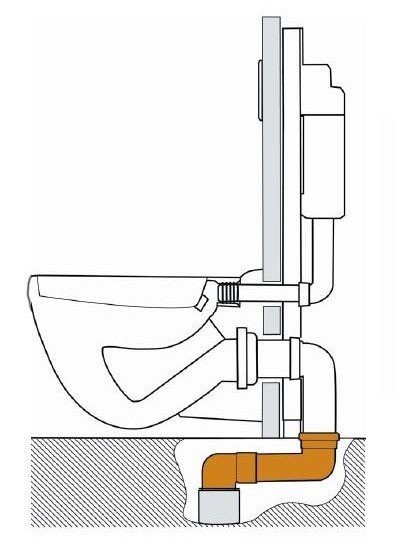
A partially obstructed trap. Something is lodged in the toilet’s internal trap and everything that passes catches on it. Symptom: it clogs on completely normal use, with no pattern.
Roots or a failing line. Repeat clogs plus gurgling plus occasional smell is the classic signature. A camera inspection answers it in twenty minutes.
The toilet itself. Early low-flow models from the nineties were genuinely bad — reduced water, unchanged bowl design, chronic clogging. If yours is that vintage and it clogs weekly, replacement is cheaper than the ongoing calls. Modern 1.28-gallon toilets with a decent MaP score clear a bowl better than the 3.5-gallon units they replaced.
No plunger and it isn't your bathroom
Hotel, friend’s house, Airbnb, the office. Different problem — you need it discreet, low-mess, and fast.
Stop the refill first. Same as at home: tank lid off, hold the flapper down. Nobody hears that.
Inventory what’s in the room. A hotel bathroom is better stocked than it looks: shampoo or body wash is your dish soap, the ice bucket or the wastebasket liner is your bucket, hot tap water runs plenty hot, the laundry bag makes a glove, and a hand shower or bidet sprayer if fitted is a pressure jet. Soap plus a hard pour from height, twice, clears most of what happens in a guest bathroom.
Ventilate and run the fan. Buys you time and dignity.
At a hotel, just call the front desk. They have a plunger in a closet forty feet away, they deal with this daily, nobody remembers your room number, and a flooded bathroom is a genuinely worse conversation than this one. Housekeeping will thank you for calling early.
At a friend’s house, check the bathroom cupboard and behind the toilet — the plunger is usually right there. If not, ask. Everyone has been here.
Do not keep flushing to test it. This is where a private embarrassment becomes a shared emergency.
Preventing the next one
Most clogs are caused by one of a small handful of things.
Only toilet paper and human waste go down. That’s the whole rule.
“Flushable” wipes are not flushable. They pass through the toilet and then don’t break down. Wipes are the single largest contributor to household blockages and to the fatbergs that municipal systems fight constantly. The label is a marketing claim, not a plumbing standard.
Also never flush: paper towels and tissues (designed not to break apart when wet), cotton balls and swabs, dental floss (it catches everything else), feminine hygiene products, condoms, hair, cat litter, food, grease, or medication.
Use the double flush. If you need a lot of paper, flush halfway through. Two easy flushes beat one clog.
Lid down, always, in any bathroom used by small children. Toys, phones, and toothbrushes end up in toilets because the lid was up.
Descale the rim jets once or twice a year if you’re on hard water. Ten minutes of maintenance protects your flush strength.
Don’t hang bleach tablets in the tank. They degrade the flapper and gaskets, which weakens your flush, which causes clogs. It’s a slow own goal.
Keep these five things in the bathroom cupboard
You do not want to be reading this article again from the floor.
Item | Why |
Flange plunger (not a cup plunger) | The flange seats in a toilet drain; the flat cup one doesn’t. Under $15. |
Toilet auger | Reaches past the trap without scratching the bowl. Around $25. |
Rubber gloves | Non-negotiable. |
Enzyme drain treatment | Monthly maintenance, and your overnight option. |
Old towels and a cheap bucket | Containment beats cleanup. |
Frequently Asked Questions
What’s the fastest way to unclog a toilet with no plunger? Half a cup of dish soap into the bowl, then a gallon of hot tap water poured hard from waist height, then wait 15 minutes and flush. If that doesn’t do it, the two-litre bottle pressure method is the next strongest.
Will hot water alone unclog a toilet? Sometimes, for a mild paper clog. It’s much more effective with soap first, and much more effective poured from height than trickled in.
Can I use boiling water? No. It can crack the bowl, and the crack costs far more than the clog. Hot tap water is enough — and at Colorado Springs’ altitude, boiling water isn’t as hot as it is at sea level anyway, so you’re taking the risk for less benefit.
Does baking soda and vinegar actually work? Rarely, for real blockages. The two neutralise each other almost immediately and get diluted in the bowl water, and the reaction provides no mechanical force. It’s fine for odour and light scale. It’s not a clog treatment, despite being at the top of nearly every list online.
Can I use dish soap if I have a septic system? A single dose of dish soap is fine. Repeated chemical drain cleaner is not — it kills the bacteria your tank depends on. Enzyme treatments are actively good for septic systems.
How long should I wait before calling a plumber? Two methods and about an hour. Immediately if more than one drain is affected, if water reached the floor, or if there’s a sewage smell.
My toilet is clogged and there’s waste in the bowl. Does that change anything? Only the precautions. Gloves, glasses, ventilation, and towels on the floor. The methods are the same — and organic clogs are exactly the ones that respond best to soap, heat, and a hard pour. Bail some water out first if the bowl is near the rim, using a container you’re happy to throw away.
Can I use a toilet brush as a plunger? We don’t recommend it. The head can’t seal, so it produces mess without pressure. A padded coat hanger does the mechanical job far better.
Something valuable fell in. What now? Don’t flush, don’t pour, don’t pressurise — those are the three things that lose it. Bail the bowl and call a plumber. Pulling and resetting a toilet is routine and usually recovers the item undamaged.
Why does my toilet keep clogging even when nothing unusual gets flushed? Weak flush is the usual answer: low tank water level, an early-closing flapper, or mineral-scaled rim jets. Check the tank water level first — it should be about an inch below the top of the overflow tube. If everything upstream is fine and it still clogs, you’re looking at the trap, the vent, or the drain line, and it needs a camera.
The short version
Turn the water off before you do anything else. Work out whether it’s soft, solid, or a main-line problem, because that decides everything. For a soft clog, dish soap plus hot tap water poured from height is the highest-percentage fix there is, with the two-litre bottle as your backup and a padded hanger for anything you can feel. Skip the baking soda theatre, skip the drain cleaner entirely, and never pour boiling water into porcelain. Give it two methods and an hour, and if it hasn’t moved — or if any other drain in the house is misbehaving — stop, because past that point DIY costs more than the call.
If you’re in Colorado Springs and it’s stubborn, recurring, or already on your floor, get a Colorado Springs plumbing repair technician out to it. We’ll clear it, tell you why it happened, and check whether it’s going to happen again.